


This simple, home made sauerkraut recipe is likely one of the easiest and most rewarding ferments you can also make. With simply cabbage, salt, and time, you may create tangy, probiotic-rich home made sauerkraut that helps intestine well being and provides brightness to nearly any dish. This information walks you thru the standard fermentation methodology, explains the science behind it, and features a troubleshooting part so you may confidently deal with frequent points like yeast, mildew, and brine issues.
What Is Sauerkraut?
Sauerkraut actually means “bitter cabbage” in German. It’s made by fermenting finely shredded cabbage with salt, permitting pure lactic acid micro organism to transform sugars into lactic acid. This fermentation course of naturally preserves the cabbage and creates its distinctive bitter taste.
Sauerkraut is a type of uncommon meals that’s each extremely easy and surprisingly highly effective. At its core, it’s simply cabbage and salt, however via pure fermentation, it transforms right into a probiotic-rich staple that helps digestion, boosts intestine well being, and provides brightness to nearly any meal.
Cultures world wide have relied on fermented cabbage for hundreds of years, not only for its taste however for its potential to protect vitamins and preserve greens recent lengthy after harvest.
Why Make Sauerkraut at Home?
Making sauerkraut at house is greater than a kitchen mission, it offers you full management over high quality, taste, and vitamin.
Most store-bought variations are handy, however many are pasteurized or preserved with vinegar, which suggests they lack the reside probiotics that make conventional sauerkraut so helpful. When you ferment it your self, you get the complete spectrum of residing micro organism, a cleaner ingredient record, and the liberty to customise flavors by including elements like garlic, jalapeños, caraway, ginger, or no matter conjures up you.
It’s additionally extremely cost-effective. A single head of cabbage can yield a jar of sauerkraut that lasts for months, and the method requires no particular tools. All you want is a jar, sea salt, and a little bit of persistence.
Homemade sauerkraut is just not solely brisker and extra vibrant than most store-bought variations, but in addition deeply satisfying to create. Once you find out how simple it’s to make, you’ll need to preserve it as a staple in your house.
Sauerkraut Recipe: Ingredients and Equipment
You solely want just a few easy elements and primary instruments to make this conventional sauerkraut recipe at dwelling:
Ingredients
- 1 medium inexperienced cabbage (about 2–3 lbs)
- 1.5–2 tablespoons wonderful sea salt (2–3% of cabbage weight)
- Optional: caraway seeds, garlic, juniper berries, or different flavorings
Equipment
- Large mixing bowl
- Cutting board and sharp knife
- 1 quart-size mason jar or fermentation crock
- Fermentation weight (a smaller jar, glass weight, or water-filled bag)
- Clean fabric or airlock lid
How to Make Sauerkraut: Step-by-Step Instructions
Step 1: Prep the Cabbage
Remove any broken outer leaves. Quarter the cabbage, take away the core, and slice it into skinny shreds. The thinner the slices, the quicker and extra evenly it ferments. A meals processor with a shredding attachment makes this step fast and simple.
Step 2: Salt and Massage
Place shredded cabbage in a big bowl and sprinkle with salt. Massage for five–10 minutes till:
- The cabbage softens
- It releases sufficient liquid to kind a brine
- The quantity reduces considerably
This brine is crucial—it protects the cabbage from oxygen and dangerous microbes.
Step 3: Pack the Jar
Transfer the cabbage into your jar or crock a handful at a time, urgent firmly to get rid of air pockets. Pour any remaining brine from the bowl excessive. Add filtered water if wanted to cowl the cabbage fully.
Step 4: Submerge the Cabbage
Place a fermentation weight on prime to maintain the cabbage absolutely submerged. This prevents mildew and ensures a protected, anaerobic surroundings.
Step 5: Cover and Ferment
Cover the jar with both a fabric secured with a rubber band or a fermentation lid with an airlock. Place your jar in a cool, darkish spot (65–72°F is right).
Step 6: Ferment for 1–4 Weeks
Check every day for the primary few days:
- Press the load down if cabbage rises above the brine
- Skim off any innocent floor bubbles
Taste after 7 days. When it reaches your most popular tanginess, transfer it to the fridge to sluggish fermentation.
How to Know When Sauerkraut Is Ready
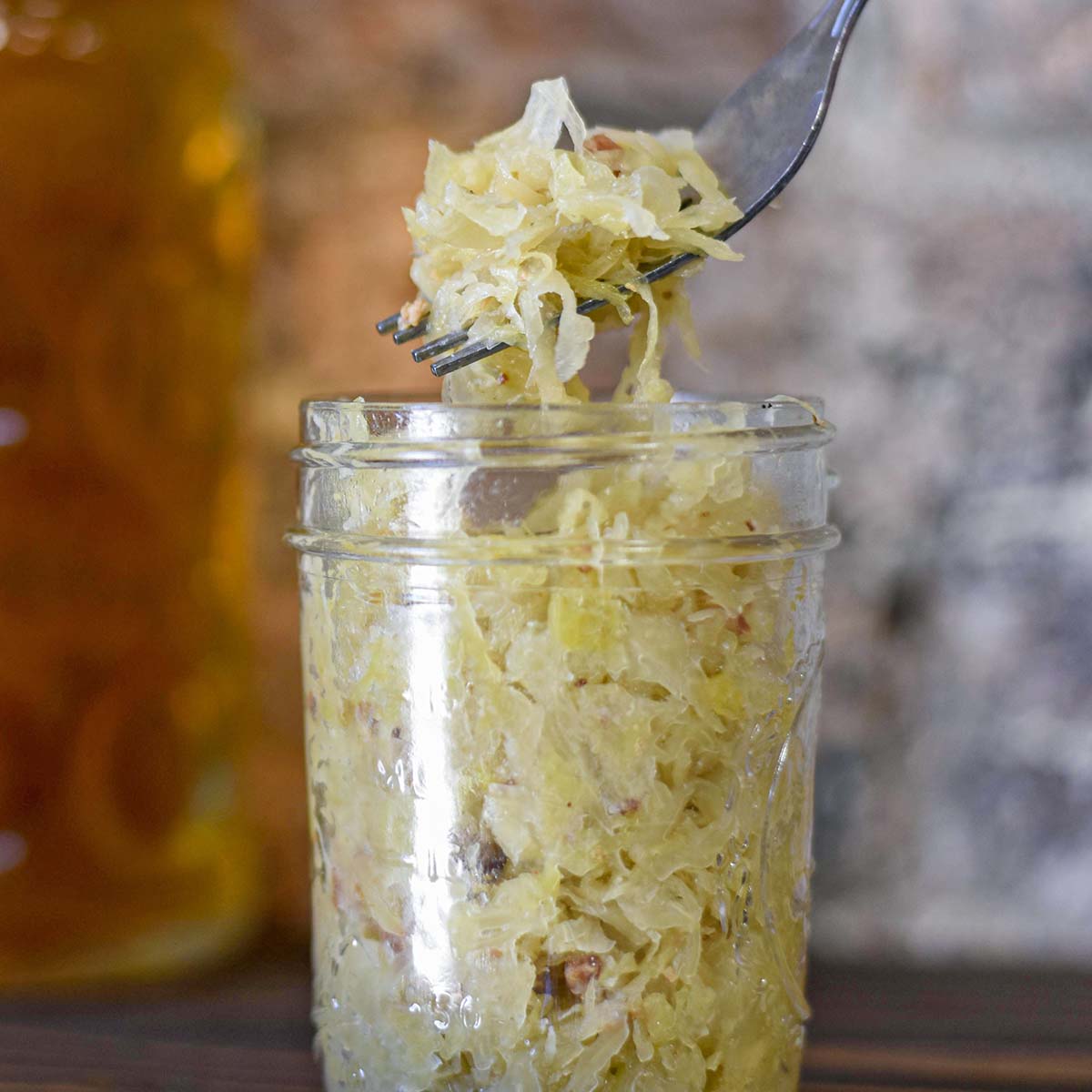 Perfectly fermented sauerkraut with perfect texture
Your sauerkraut is finished when:
- It smells pleasantly salty and bitter
- It tastes tangy and crisp
- The brine is cloudy (a standard signal of energetic fermentation)
Longer fermentation creates deeper taste. Shorter fermentation ends in milder kraut. The alternative is yours!
Sauerkraut Salt Ratio: How Much Salt to Use
The appropriate salt ratio is essential for profitable fermentation. Use 2–3% salt by weight of your cabbage.
No Scale Required: Simple Salt Measurement
Use 1½ to 2 teaspoons of wonderful sea salt per pound of shredded cabbage:
- 1½ tsp per pound ≈ 2% salt: milder taste, quicker ferment
- 2 tsp per pound ≈ 2.5% salt: firmer, crunchier, extra mold-resistant
Important: Always use non-iodized sea salt or kosher salt. Iodized desk salt can inhibit fermentation.
Troubleshooting Sauerkraut: Common Problems and Solutions
Fermentation is straightforward, however small points can pop up. Here’s the right way to deal with them confidently.
1. White/Gray Film on Top (Kahm Yeast)
What it’s: Harmless yeast from oxygen publicity.
What to do: Scrape off, clear jar rim, preserve cabbage submerged. Safe if scent/style regular.
2. Mold (Black, Pink, Red, Fuzzy, or Widespread Growth)
What it’s: Harmful mildew that may produce mycotoxins.
What to do: Discard batch. Do not salvage.
Prevention: Keep cabbage submerged, 2–3% salt, sanitize jars/utensils.
3. Not Enough Brine
Causes: Cabbage too dry, not massaged, low salt.
Fix: Add 2% saltwater (½ tsp per cup) till cabbage submerged.
4. Sauerkraut Is Too Salty
Causes: Excess salt.
Fix: Rinse evenly, exchange ½ cup brine with water, use decrease 2–3% salt subsequent time.
See additionally
5. Sauerkraut Is Mushy
Causes: Low salt, heat fermentation, loosely packed cabbage.
Fix: Use agency cabbage, cooler spot, stick with 2–3% salt.
6. Sauerkraut Smells Rotten or “Off”
Signs of spoilage: Rotten/sulfur scent, slimy, brown/discolored cabbage.
Fix: Discard batch, begin recent with clear tools and correct salt.
6 Tips for Perfect Sauerkraut Every Time
Follow the following pointers to make sure sauerkraut success:
- Use recent, dense cabbage, it’ll have extra water and produce extra brine
- Keep every little thing clear however not sterile (fermentation wants pure micro organism)
- Maintain a cool, steady temperature (65–72°F)
- Always preserve cabbage absolutely submerged beneath brine
- Taste usually. Fermentation is versatile and forgiving
- Start with small batches till you’re comfy with the method
How to Store Homemade Sauerkraut
Once your sauerkraut reaches your required degree of tanginess, switch it to the fridge. The chilly temperature slows fermentation considerably, permitting your sauerkraut to keep up its taste and texture for a number of months.
Always use clear utensils when serving to forestall contamination. Properly saved sauerkraut can final 4–6 months within the fridge, although it’s typically eaten a lot sooner!
Sauerkraut Flavor Variations to Try
 Creative taste variations for home made sauerkraut
Once you’ve mastered primary sauerkraut, experiment with these taste additions:
- Caraway Sauerkraut: Add 1–2 teaspoons caraway seeds for conventional German taste
- Garlic Kraut: Add 2–4 sliced garlic cloves
- Spicy Kraut: Add sliced jalapeños or purple pepper flakes
- Apple Kraut: Add shredded tart apple for sweetness
- Juniper Kraut: Add 1 teaspoon juniper berries for an earthy, gin-like taste
- Ginger Turmeric Kraut: Add recent grated ginger and turmeric for anti-inflammatory advantages
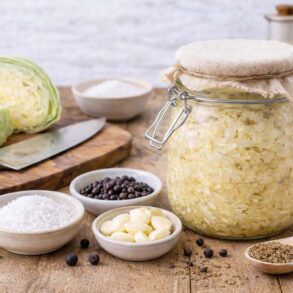
Easy Homemade Sauerkraut Recipe
Use recent, dense cabbage for the most effective brine manufacturing.
-
Cutting board + sharp knife
-
1 quart mason jar or fermentation crock
-
Fermentation weight (glass weight, small jar, or water‑stuffed bag)
-
Cloth cowl or airlock lid
- 1 medium inexperienced cabbage 2–3 lbs
- 1.5-2 tablespoons Sea Salt (DO NOT Use Iodized) 2–3% of cabbage weight
- Optional Add‑Ins:
- 1-2 teaspoons caraway seeds
- 1-2 cloves garlic sliced
- 1 tsp juniper berries
-
Prep the Cabbage: Remove outer leaves, quarter the cabbage, take away the core, and shred or slice thinly. A meals processor fitted with a shredding attachment could make this very easy.
-
Salt and Massage: Place cabbage in a big bowl. Sprinkle with salt and therapeutic massage the cabbage with the salt for five–10 minutes till it softens and releases sufficient liquid to kind a brine.
-
Pack the Jar: Transfer cabbage into your jar a handful at a time, urgent firmly to take away air pockets. Pour any remaining brine excessive. Add filtered water to cowl the cabbage fully.
-
Submerge the Cabbage Under the Brine: Add a fermentation weight or small glass jar to maintain the cabbage absolutely submerged beneath the brine.
-
Cover and Ferment: Cover with a fabric wrapped with a rubber band or airlock lid. Ferment at cool room temperature (65–72°F) for 1–4 weeks.
-
Taste and retailer: Begin tasting after 7 days. When it reaches your most popular tanginess, switch to the fridge to sluggish fermentation.
- Cloudy brine is regular and an indication of energetic fermentation.
- Kahm Yeast (White/Gray Film) is Harmless. Scrape it off, clear the jar rim, and guarantee cabbage stays submerged.
Mold (Black, Pink, Red, or Fuzzy) is Unsafe. Discard your entire batch. - Not Enough Brine?: Add a small quantity of two% saltwater brine (½ tsp salt per cup of water).
- Too Salty?: Rinse evenly earlier than consuming or use much less salt subsequent time.
Mushy Texture: Caused by low salt or heat temperatures. Keep the ferment cool and use 2–3% salt.
The Simple Salt to Cabbage Ratio: No Scale Required Rule
Use 1½ to 2 teaspoons of wonderful sea salt per pound of shredded cabbage.
This matches the protected fermentation vary:
• 1½ tsp per pound ≈ 2% salt
• 2 tsp per pound ≈ 2.5% salt
Both are appropriate (select primarily based on style and texture):
• 2% (1½ tsp/lb): milder, quicker ferment
• 2.5% (2 tsp/lb): firmer, crunchier, extra mildew‑resistant
Frequently Asked Questions About Making Sauerkraut
Do I want particular tools to make sauerkraut?
No! A easy mason jar, sea salt, and a weight (even a small jar full of water works) are all you want. Specialized fermentation crocks and airlocks are useful however not obligatory.
Can I take advantage of a distinct kind of cabbage?
Yes! While inexperienced cabbage is conventional, you should utilize purple cabbage (which creates a good looking purple kraut), Napa cabbage, or savoy cabbage. Each selection gives barely completely different textures and flavors.
How lengthy does home made sauerkraut final?
When saved within the fridge, correctly fermented sauerkraut lasts 4–6 months and even longer. The excessive acidity and salt content material act as pure preservatives.
Is it regular for my sauerkraut to bubble?
Absolutely! Bubbling is an indication of energetic fermentation. This is the lactic acid micro organism doing their job changing sugars into lactic acid.
Why is my brine cloudy?
Cloudy brine is totally regular and signifies wholesome fermentation. It’s brought on by helpful micro organism and is an efficient signal!
Can I ferment sauerkraut for longer than 4 weeks?
Yes, however the taste turns into more and more bitter and the feel might soften. Most individuals choose sauerkraut fermented for two–3 weeks, but it surely’s fully a matter of non-public choice.
Related Fermentation and Gut Health Articles
Looking to broaden your information about fermented meals and intestine well being? Check out these useful assets:
Final Thoughts: Making Sauerkraut Is Simple, Safe, and Delicious
Making sauerkraut at dwelling is likely one of the best methods to begin fermenting. With simply cabbage, salt, and a little bit of persistence, you may create a flavorful, probiotic-rich staple that lasts for months.
The course of is forgiving, the elements are minimal, and the well being advantages are substantial. With the troubleshooting suggestions above, you’ll be capable to deal with any bumps alongside the way in which like a seasoned fermenter.
Ready to get began? Grab a head of cabbage and provides this straightforward sauerkraut recipe a attempt at the moment!
Better Living makes use of affiliate hyperlinks. If you make a purchase order via them, we might obtain a small fee (for which we’re deeply grateful) for free of charge to you.